
I. Introduction: Why Cockroaches Demand Professional Intervention
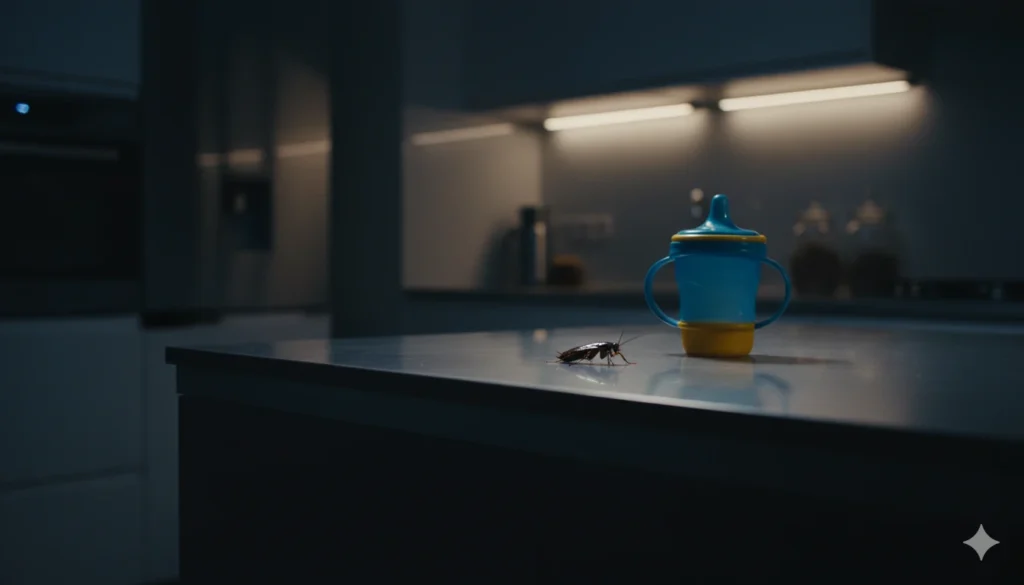
The Public Health Impact of Cockroach Infestations
Cockroach control is essential as cockroaches are universally acknowledged as significant pests of public health importance, exhibiting a formidable capacity for survival and rapid reproduction. Infestations are not merely aesthetic problems; they are major sources of allergens and have been identified as risk factors for the development of asthma, particularly within multi-unit housing environments.
The Failure of Traditional Chemical Controls
The historical reliance on traditional chemical control strategies, such as broad residual sprays and Total Release Foggers (TRFs), has proven largely ineffective for long-term management. Studies confirm that TRFs typically fail to penetrate the hidden crevices where cockroaches harbor and breed, and furthermore, they pose a high risk of pesticide exposure to occupants.
The Rise of Pesticide Resistance
This widespread application of chemicals has instigated a critical evolutionary challenge: pesticide resistance. Research indicates that German cockroaches (Blattella germanica) can rapidly develop resistance, including cross-resistance to chemical classes to which they have never been exposed, rendering control nearly impossible with chemicals alone.
The Shift to Integrated Pest Management (IPM)
Consequently, effective cockroach management mandates a paradigm shift toward Integrated Pest Management (IPM), a strategy proven to lead to long-term reductions in cockroach populations and decreased allergen concentrations, resulting in a healthier environment.
II. Identifying the Enemy: The Pest Profile and Life Cycle
Understanding Cockroach Metamorphosis
Successful control is predicated upon accurate identification, as control methods must be tailored to the species’ specific biology and behavior. Cockroaches undergo incomplete metamorphosis, progressing through three primary stages: egg, nymph, and adult.
A. German Cockroach (Blattella germanica): The Indoor Challenge
The German cockroach is the most common indoor species worldwide, particularly persistent in environments with food preparation or storage.
1. Identification and Reproductive Capacity
This species is relatively small, measuring approximately 0.5 to 5/8 inches (1.3–1.6 cm), and is characterized by a light brown or tan body with two distinct dark parallel stripes on the pronotum (the shield behind the head). Of greatest concern is its reproductive efficiency. A single female produces 30 to 40 eggs per ootheca (egg case) and can produce over 30,000 offspring in a year, leading to immense population growth in a short period (approx. 103 days for egg-to-adult development).
2. The Ootheca Carrying Behavior
Female German cockroaches exhibit unique maternal behavior, carrying the ootheca attached to the abdomen until the eggs are nearly ready to hatch (about 28 days gestation). This practice protects the eggs from environmental hazards and most insecticide applications.
B. American Cockroach (Periplaneta americana): The Water Bug Threat
The American cockroach is the largest domestic species in the U.S., reaching 1.5 to 2 inches in length, characterized by a reddish-brown body with yellowish markings on the thorax.
1. Habitat and Life Cycle
This species prefers warm, humid environments, often inhabiting outdoor locations such as sewers, drains, basements, and crawlspaces, and invades structures seeking food and water. Their life cycle is substantially longer than that of the German cockroach, taking approximately 600 days (or 6–12 months in some environments) from egg to adult.
2. Egg Deposition and Parthenogenesis
The female American cockroach deposits the ootheca (containing about 16 eggs) by gluing it to a protected surface near a food source using saliva and debris, typically within a few days of formation. Furthermore, adult female American cockroaches are capable of parthenogenesis (producing fertile offspring without mating), and group living appears to improve the success rate of this asexual reproduction, complicating eradication efforts.
III. The Battle of Persistence: Cockroach Biology and Resilience
The Secrets to Cockroach Survival
The longevity of cockroaches over 300 million years is a testament to their exceptional biological resilience and survival strategies.
A. Ootheca Resilience: The Protective Capsule
All pest species produce an ootheca, a protective egg capsule composed of structural proteins and tanning agents that harden into a sturdy casing. This structure represents a highly effective reproductive strategy, as the hardened shell prevents eggs from suffering water loss, predators, parasitoids, and environmental injury.
B. Essential Survival and Harborage Sites
Cockroaches require food, water, and shelter. They are omnivorous scavengers, consuming human food, grease, starches, and unusual materials such as soap, toothpaste, paper, and glue. Critically, while they can survive approximately one month without food, they can only survive about one week without water.
Common Harborage Hotspots
Cockroaches are nocturnal and thrive in areas that are warm, dark, and moist. Common harborage sites include:
- Kitchen and Bath Appliances: Behind, under, and inside appliances like toasters, refrigerators, and ovens, which provide warmth, moisture, and food debris.
- Pipes and Drains: Under sinks and in basements where pipes may drip, providing essential moisture.
- Structural Voids: Cracks, crevices, hollow walls, and behind cabinets, as adult German cockroaches can hide in a space as narrow as 1/16 inch wide.
- Clutter and Debris: Trash, old magazines, paper piles, and boxes provide both shelter and food sources.
IV. The Strategic Attack: Implementing IPM Best Practices
A Multi-Faceted Approach to Cockroach control
IPM necessitates specific procedures focusing on physical, biological, and chemical controls, alongside structural and environmental modifications.
A. Inspection, Monitoring, and Exclusion
Effective management begins with accurate mapping of population activity:
Monitoring and Identification
Sticky traps or glue boards are excellent tools for detecting and monitoring populations, allowing technicians to identify the most heavily infested areas based on daily trap counts.
Sealing Entry Points
Limiting access to harborages is paramount. This requires sealing cracks and structural openings with materials such as caulk, and using door sweeps or weather stripping to prevent entry.
Physical Removal of Infestations
Vacuuming cracks and crevices is a non-chemical method that effectively removes live roaches, nymphs, shed skins, and egg cases, which substantially reduces population numbers and allergen levels. For safety, vacuum cleaners should utilize a HEPA filter or triple filters, as aerosolized droppings can trigger allergies.
B. Sanitation and Environmental Modifications
Structural and sanitation improvements are foundational to IPM, as they remove the resources sustaining the population:
1. Water Deprivation
Eliminate all plumbing leaks and other sources of moisture. Increase ventilation where condensation is a problem. Depriving roaches of water is one of the fastest ways to stress a population.
2. Food Security
Store all food, including pet food, in insect-proof containers. Ensure garbage is kept in containers with tight-fitting lids and is emptied regularly.
3. Clutter Reduction
Remove unnecessary materials such as stacks of lumber, firewood, newspapers, or magazines that provide protected hiding places.
4. Ootheca Disposal
If an egg case is located, it must be removed. The professional recommendation is to smash it or wrap it in tape and throw it in the garbage.
C. Chemical Control: Utilizing Baits Over Sprays
Chemical application should be targeted and cautious, recognizing the high degree of insecticide resistance.
1. Avoiding Repellent and Hazardous Treatments
Applications of aerosol insecticides and TRFs are generally ineffective as they fail to reach hidden areas and can repel cockroaches, dispersing them to other parts of the building or increasing their resistance. Furthermore, chemical treatments involving mixtures or rotations of pesticides were shown in some studies to result in population stability or an explosion due to accelerated cross-resistance.
2. The Strategic Use of Baits and Dusts
Insecticidal baits (gels, pastes, or granules) are the preferred primary pesticides in modern control programs. Baits are considered safer, require less insecticide, and are highly effective for long-term control.
Baits do not attract cockroaches over long distances, thus requiring precise placement near harborages or where roaches are likely to encounter them. A best practice is to place baits next to fecal specks and droppings, utilizing the natural aggregation pheromones present in these deposits.
Boric acid dust is a crucial component of IPM. It acts as a contact and oral insecticide and, crucially, cockroaches in studied strains did not develop resistance to it. Boric acid should be applied as a light, uniform film into enclosed voids and under appliances, and must remain dry to maintain its efficacy.
V. Advanced Control and Scientific Horizons
The Future of Cockroach Management
Ongoing research explores sustainable alternatives to persistent chemical insecticides.
A. Biopesticides and Essential Oils (EOs)
Biopesticides are emerging as potential futuristic strategies, proven to be sustainable and safer than conventional chemicals. Plant-derived Essential Oils (EOs), such as those from peppermint and palmarosa, contain bioactive compounds that exhibit contact and fumigant toxicity against pests like the German cockroach. Furthermore, entomopathogenic fungi, including Metarhizium anisopliae and Beauveria bassiana, have demonstrated the ability to infect and kill the oothecae of the American cockroach.
B. Convergent Reproductive Adaptations
Molecular biology studies underscore the profound reproductive complexity of cockroaches. The rare Pacific beetle-mimic cockroach gives birth to live young, a process that requires the mother to produce a nutrient similar to milk. Importantly, researchers have identified that these live-bearing insects, similar to pregnant humans, undergo immune system suppression to accommodate the growing young, demonstrating a shared, convergent evolutionary mechanism across vastly different animal taxa.
VI. Conclusion: Seeking Professional, Long-Term Protection
Why Professional Intervention is Key
Cockroaches are persistent pests that require a detailed understanding of their biology and life cycle—especially the resilient, protected ootheca and the rapid reproductive rate of the German cockroach. Because insecticide resistance is a severe, documented problem, reliance on Integrated Pest Management strategies—combining sanitation, exclusion, monitoring, and targeted, low-risk baits—is not merely an option but a mandate for achieving long-term eradication and reducing associated health risks. For severe or persistent infestations, consulting a trained professional remains the most effective course of action.