
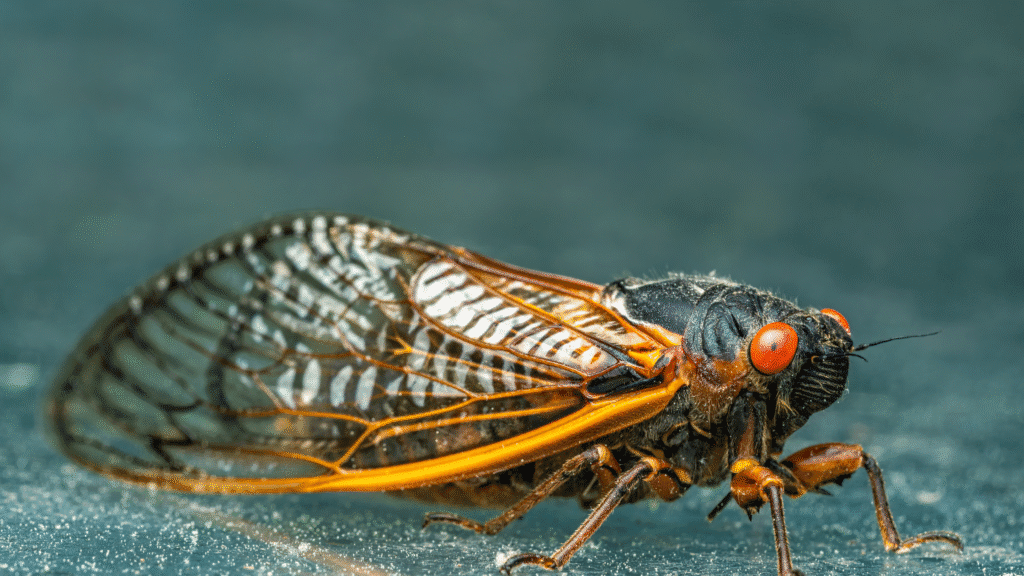
Their characteristic, often pervasive, acoustic output universally announces the emergence of cicadas during the summer months. Cicada sounds are much more than a simple background hum. These insects use a complex system of sounds for communication and survival. This analysis explores how cicadas produce their songs. It also examines the diverse purposes their vocalizations serve and their broader ecological and human impacts.
Their characteristic, often pervasive, acoustic output universally announces the emergence of cicadas during the summer months. Cicada sounds are far more than a simple background hum. For these insects, sound is a complex system for communication and survival. This analysis explores how cicadas produce their songs. We will also examine the diverse purposes their vocalizations serve. Finally, it considers the broader ecological and human impacts of these remarkable sounds.
Mechanisms of Sound Production
Cicadas possess renowned and unique acoustic capabilities due to their specialized anatomical structures.
The Tymbal Organ: A Marvel of Bioengineering
Male cicadas primarily generate sound using a pair of tymbals. This buckling creates rapid pressure changes within the abdominal cavity, releasing sound vibrations. Cicadas can achieve an astonishing rate of 300-400 sound waves per second.
The cicada’s body is further engineered for acoustic amplification. The hollow abdominal cavity and internal trachea (air tubes) function as coupled Helmholtz resonators, significantly amplifying the sound. This allows for the production of very loud, continuous noises. Species like Neotibicen modulate their song by flexing abdomens, a process involving tymbal covers and tensor muscles.
Diverse Acoustic Strategies
While tymbals are the most prominent sound-producing organs, cicadas employ various other methods for communication:
• Female Responses: Female cicadas typically produce sounds, often wing flicks, as responses to male courtship calls.
• Crepitation: Certain cicada genera, such as Platypedia, lack tymbals and generate crackling or popping noises through crepitation, which involves the use of their wings.
• Wing-Clicks: Amphipsalta zelandica of New Zealand utilizes distinct wing-clicks for communication.
• Stridulation: Species like Australia’s Green Grocer can produce sound by rubbing raspy body parts with a wing, a process known as stridulation. This mechanism differs from the wing-rubbing seen in crickets.
• Substrate Vibration: Uniquely, species within the genus Tettigarcta communicate by vibrating the substrate (e.g., soil or plant matter) they inhabit, rather than primarily vibrating the air.
Acoustic Characteristics: Loudness and Pitch
Cicadas are widely recognized as the loudest insects on Earth.
• Decibel Levels: Some larger species can generate calls in excess of 120 decibels (dB) at close range, a level approaching the human ear’s pain threshold. Other sources indicate sound pressure levels of 100 dB at 50 cm or 106 dB (SPL). This is comparable to the noise level produced by a motorcycle revving or a jackhammer.
• Frequency and Size: Generally, larger cicadas produce a louder and lower-pitched song, which benefits from greater long-distance transmission. Research links sound frequency to body size. Wider, heavier cicadas often produce a higher dominant frequency. In contrast, larger bodies have a lower resonant frequency. This is due to the increased volume of the abdomen.
• Sharpness of Tuning (Q-value): The “quality factor” or Q-value, measures the sharpness of a cicada’s sound tuning, with a higher Q indicating a more sharply tuned resonator. Differences in Q-values among species are interpreted as different evolutionary solutions to communication challenges.
The Purpose of Cicada Vocalizations
Cicada songs serve critical functions in their life cycle, extending beyond simple noise.
Mate Attraction and Territoriality
The primary function of male cicada songs is to attract females for mating and establish territories. Each species possesses a distinct song that selectively attracts only conspecific females, enabling multiple species to coexist in the same environment. Periodical cicadas (Magicicada) often aggregate in dense “chorusing centers” where males call simultaneously. This collective calling confers a collective advantage for long-distance sound transmission and intensifies competition among males for mates.
Predator Avoidance and Satiation
Periodical cicada species, with their exceptionally long and synchronous 13- or 17-year life cycles, emerge in prodigious numbers, sometimes exceeding 3.5 million individuals per hectare. This overwhelming abundance serves to satiate their predators, rendering the per capita risk of predation extremely low. The sheer loudness of cicada choruses may also act as a deterrent, potentially repelling birds or interfering with their group hunting communication. This represents an evolutionary trade-off between maximizing mate attraction and minimizing enemy encounters. Periodical cicadas are noted for certain “predator-foolhardy” traits, such as slow flight and insensitivity to disturbance, which are advantageous during mate seeking but may also increase vulnerability to specific fungal parasites.
The Acoustic Anomaly of Magicicada septendecim
Magicicada septendecim is an evolutionarily distinct species characterized by an unusually sharply tuned (high Q-value), low resonant frequency, and remarkably quiet song compared to other cicada species, despite its relatively large size. Its song is significantly quieter than those of M. cassini and Tibicen species.
Two primary hypotheses attempt to explain this unique acoustic profile:
• Acoustic Avoidance: One explanation posits that the quiet, low-frequency song facilitates acoustic avoidance of other cicada species. M. septendecim exhibits a low auditory threshold at 1.4 kHz, implying a relative “deafness” to the higher frequencies (typically above 4 kHz) produced by co-occurring cicada species. This acoustic filtering is interpreted as an adaptation allowing M. septendecim to focus on conspecifics within loud, mixed-species choruses, potentially as a result of character displacement.
• Predator Detection: An alternative hypothesis suggests that M. septendecim evolved to communicate within a predator-sensitive frequency channel. This adaptation might enable singing cicadas to possess directional sensitivity to acoustic signals from predators and parasitoids. This perspective challenges the earlier belief that all M. septendecim traits are “predator-foolhardy”. The unique physiological features contributing to its low frequency include an unusually thick and pliable tympanum, as well as properties of its tymbal and tensor muscles.
Environmental and Human Impacts of Cicada Sounds
The powerful acoustic output of cicadas has repercussions beyond their species, influencing wildlife communication and human well-being.
Interference with Wildlife Communication
Cicada choruses can significantly impact the acoustic communication of other animals, particularly birds.
• Temporal and Spectral Avoidance: Birds frequently reduce and often cease their vocalizations upon the onset of cicada signals, especially those that share the same frequency range. When birds do vocalize simultaneously with cicadas, they primarily do so at non-overlapping frequencies with the louder cicada signals.
• Dawn Chorus Explanation: This phenomenon offers an additional explanation for why birds are most vocal early in the day. The typical mid-morning onset of cicada signals, such as those of Zammara smaragdina, allows birds to vocalize with less interference from other animal taxa during the initial 2-3 hours after dawn.
Effects on Human Hearing
The intense sound levels produced by cicadas can pose a risk to human hearing.
• Tinnitus Risk: For individuals with tinnitus (ear-ringing), cicada sounds, which can reach 100 decibels (dB), have the potential to exacerbate their condition. Exposure to 100 dB for 15 minutes is sufficient to cause noise-related hearing loss.
• Protection Measures: To safeguard hearing during cicada season, particularly in areas of dense aggregations, it is advisable to utilize headphones or earplugs. Individuals with tinnitus or pre-existing hearing challenges may consider limiting outdoor exposure during peak cicada activity, typically afternoons through dusk, especially in hot and sunny weather. A sound meter app from the National Institute for Occupational Safety and Health (cdc.gov/niosh/topics/noise/app.html) can be used to measure environmental sound levels.
Peculiar Attraction to Loud Machinery
Periodical cicadas (Magicicada) exhibit a curious attraction to loud, vibrating machinery such as lawnmowers, weed-whackers, leaf blowers, hedge trimmers, and power drills. This behavior is likely due to their interpretation of these vibrations and noises as particularly impressive “chorusing centers” of other cicadas. Males are drawn to join these perceived choruses, while females seek mates from these “impressive” sources.
Frequently Asked Questions (FAQs)
The primary organ for sound production in male cicadas is the tymbal, a ribbed membrane located on the sides of their abdomen
Cicada calls can reach up to 120 decibels (dB) at close range. Exposure to 100 dB for 15 minutes can lead to noise-related hearing loss, making it advisable to protect hearing with earplugs or headphones in areas with dense cicada populations
Cicadas sing loudly primarily to attract mates and establish territories. The loudness is also a strategy for predator avoidance, as their collective chorus can satiate or deter predators like birds
Yes, female cicadas make sounds, though typically not as loud as males. They often use wing flicks to respond to male courtship calls. Some species also use other methods like crepitation or wing-clicks
Cicadas are attracted to loud, vibrating machinery because they likely interpret the noise and vibrations as a large and impressive chorusing center of other cicadas, drawing both males (to join the chorus) and females (to find mates)